
September 29, 2026
Keeping a Boat on a Lift in Florida: What It Does to Your Engine and Hull
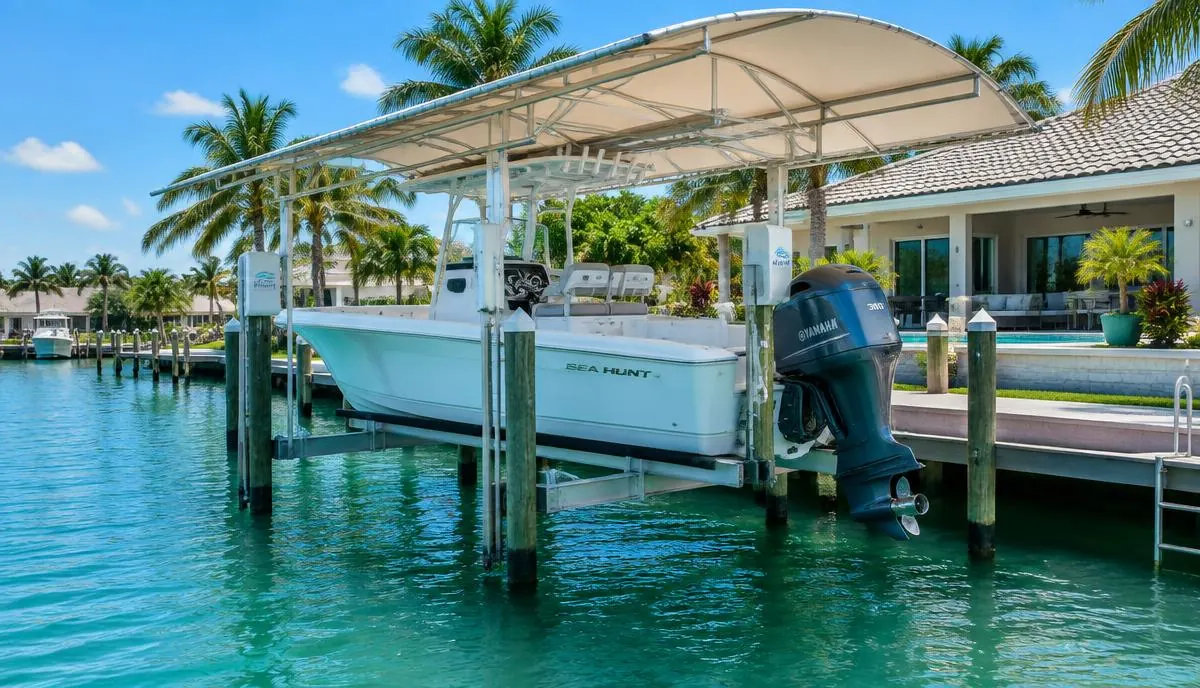
A boat lift is one of the best things you can give a boat in Pinellas County. Keeping the hull out of the water stops marine growth, cuts down on blistering, and means the boat is ready whenever you are. But a boat on a lift is still sitting outside in Florida, and that brings its own set of problems that owners often do not think about.
Sun and UV do steady damage
On a lift, the boat sits higher and is often more exposed to direct sun than a boat in a slip. Ultraviolet light breaks down gelcoat, vinyl seats, rubber trim, plastic fittings, and the cowling finish on your outboard. Over time, the gelcoat chalks and fades, and rubber parts like fuel primer bulbs, hoses, and seals get stiff and crack.
A lift canopy helps a great deal by shading most of the boat. Even with a canopy, the outboard often hangs out past the cover and takes the afternoon sun. A fitted engine cover protects the cowling and the rubber parts on the outside of the motor.
Rain water in the bilge
Summer storms in Tampa Bay can dump a lot of rain in a short time. A boat on a lift catches every drop that the canopy does not block, and that water heads straight for the bilge. If the bow is level or slightly low, water may not drain toward the stern where the pump and drain plug are.
Many owners leave the drain plug out while the boat is on the lift so rain can run out. That works well, as long as you have a firm habit of putting it back before you lower the boat. Others leave the plug in and rely on the bilge pump, which means the pump and float switch need to be working and the battery needs enough charge to run them.
Setting the lift so the bow sits slightly higher than the stern helps rain flow aft toward the drain.
Engine down or tilted up?
Owners often ask whether to leave the outboard tilted up or lowered while the boat is on the lift. There are good reasons for each.
- Lowering the engine lets water drain out of the cooling passages and the lower unit's exhaust area, so it does not sit inside the motor.
- Tilting it up keeps the lower unit out of the water if the lift sits low, and keeps it away from spray and splashing.
A common approach is to lower the engine fully after each trip so it drains, then tilt it up only if the lower unit would otherwise sit in the water. Leaving the motor tilted up for long periods also keeps weight on the trim and tilt system and can let rain water collect in places where it would normally drain.
Corrosion on lift cables and anodes
The lift itself takes a beating. Cables, pulleys, and motors sit right over salt water. Fraying cables can fail with the boat in the air. It is worth looking at your lift cables regularly for broken strands or rust.
Your outboard's anodes keep working while the boat is on the lift, but less so when they are out of the water. When the boat goes back in, they need to be in good condition to protect the lower unit and bracket. Check them regularly, and replace them when they are worn.
Run the engine regularly
Engines are happiest when they are used. A motor that sits for weeks on a lift is more likely to have stale fuel, dry seals, and weak batteries. Getting the boat off the lift and running it under load, not just at idle in the slip, burns off moisture, circulates oil, and keeps fuel moving through the system.
If you cannot get out on the water every few weeks, at least lower the boat and run the motor until it reaches operating temperature.
Covers and keeping critters out
A good cover keeps out sun, rain, and birds. Birds love boats on lifts, and their droppings are acidic and hard on gelcoat and upholstery. Make sure covers are snug and do not trap water in pools that stretch the fabric. Leave some ventilation so humidity does not build up underneath and cause mildew.
A quick lift-day routine
- Flush the engine with fresh water and lower it to drain.
- Rinse the hull, deck, and engine to remove salt.
- Turn off the battery switch unless the bilge pump needs power.
- Check that the drain plug status matches your plan.
- Put on the engine cover and any boat covers.
When to call a pro
If your boat sits on a lift for long periods, it benefits from regular scheduled service and a periodic check of the bilge pump and float switch. Call a technician if you find water in the bilge that does not drain, if the engine is slow to start after sitting, or if you notice stiff steering or cracked hoses. We work on boats right on their lifts across Pinellas County. Call (888) 720-9289 to set up a visit.
Need a hand? We come to your dock.